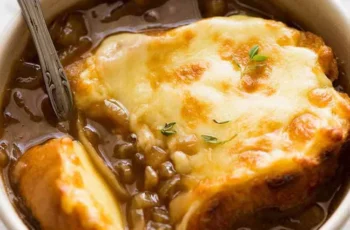
French Onion Soup: A Classic French Recipe with Rich, Caramelized Onions and Golden Cheese
French onion soup is one of the most beloved dishes in French cuisine, celebrated for its deep, savory flavor, beautifully caramelized onions, and irresistible topping of toasted bread and melted cheese. This timeless French classic transforms a handful of simple ingredients into a comforting, restaurant-quality meal that feels both elegant and satisfying.
Traditionally served in individual oven-safe bowls, French onion soup features a rich broth infused with slowly cooked onions, aromatic herbs, and a splash of wine. A slice of crusty bread rests on top, covered with melted Gruyère cheese that turns golden and bubbly under the broiler. Every spoonful delivers a delicious combination of sweet onions, savory broth, crunchy bread, and creamy cheese.
Whether you are preparing a cozy family dinner, planning a special occasion, or simply craving a warm and comforting bowl of homemade soup, this authentic-inspired French onion soup recipe is an excellent choice. With the right ingredients and a little patience, you can recreate the rich flavors of a traditional French bistro in your own kitchen.
What Is French Onion Soup?
French onion soup, known in French as soupe à l’oignon, is a traditional soup made primarily with onions and beef broth. Its signature flavor comes from caramelizing the onions slowly until they become soft, golden brown, and naturally sweet.
Although onion-based soups have existed for centuries, the version most commonly associated with modern French cuisine became especially popular in France during the 18th and 19th centuries. Over time, the dish evolved into the familiar preparation served today, featuring toasted bread and a generous layer of melted cheese.
The secret to exceptional French onion soup lies in the balance between the sweetness of the onions, the savory depth of the broth, and the richness of the cheese. Properly caramelized onions provide the foundation, while fresh thyme, bay leaves, and a splash of dry white wine add complexity.
Unlike quick vegetable soups, French onion soup requires patience during the caramelization process. However, this extra time is worthwhile because it develops the deep, concentrated flavors that make the dish so memorable.
Why You Will Love This French Onion Soup Recipe
There are many reasons to make French onion soup at home, especially when you want a dish that combines simple ingredients with impressive results.
- Rich, deep flavor: Slowly caramelized onions create a naturally sweet and savory foundation.
- Classic French comfort food: This traditional dish brings the warmth and elegance of French bistro cooking to your table.
- Simple ingredients: Onions, broth, bread, cheese, butter, and a few seasonings are all you need.
- Restaurant-quality presentation: Golden, bubbling cheese makes every serving look inviting and delicious.
- Perfect for cold weather: Its warm broth and hearty toppings make it ideal for autumn and winter meals.
- Easy to prepare ahead: You can prepare the soup base in advance and add the bread and cheese just before serving.
- Customizable: You can adjust the broth, cheese, herbs, and bread to suit your preferences.
Ingredients for Homemade French Onion Soup
The best French onion soup does not require complicated ingredients. Instead, the quality of each component and the way you prepare it determine the final flavor.
Ingredients
| Ingredient | Quantity |
|---|---|
| Yellow onions, thinly sliced | 2 pounds (about 900 g) |
| Unsalted butter | 3 tablespoons |
| Olive oil | 1 tablespoon |
| Garlic, minced | 2 cloves |
| All-purpose flour | 1 tablespoon |
| Dry white wine | 1/2 cup (120 ml) |
| Beef broth | 6 cups (1.4 liters) |
| Fresh thyme | 3–4 sprigs |
| Bay leaf | 1 |
| Worcestershire sauce | 1 teaspoon, optional |
| Salt | To taste |
| Black pepper | To taste |
| Baguette | 6 slices |
| Gruyère cheese, grated | 1 1/2 cups (about 150 g) |
| Parmesan cheese, optional | 2 tablespoons |
Choosing the Best Onions
Yellow onions are an excellent choice because they develop a balanced sweetness and savory flavor when cooked slowly. Their natural sugars caramelize gradually, creating the rich foundation that defines this soup.
Sweet onions can also be used, although they may produce a slightly sweeter result. Red onions are less traditional but can work if you enjoy their distinctive flavor.
Slice the onions evenly so they cook at a similar rate. Thin, uniform slices also make the finished soup easier to eat.
Choosing the Right Broth
Beef broth is traditionally used because it provides a deep, savory flavor that complements the caramelized onions. For the best results, choose a good-quality broth with a rich taste and moderate salt content.
If you prefer a vegetarian version, substitute vegetable broth. The soup will have a different flavor profile, but properly caramelized onions and good-quality cheese will still produce a delicious result.
Homemade stock is another excellent option when available.
The Best Cheese for French Onion Soup
Gruyère is the classic choice for its excellent melting qualities, nutty flavor, and golden finish. It creates the signature cheese topping that makes French onion soup so recognizable.
Other suitable options include Emmental, Comté, or a combination of Gruyère and Parmesan. For the smoothest result, grate the cheese yourself rather than using pre-shredded varieties, which may contain anti-caking agents.
Which Bread Should You Use?
A French baguette is ideal because its firm crust and sturdy texture hold up well beneath the melted cheese. Slightly stale bread is particularly useful because it absorbs some broth without immediately falling apart.
If you do not have a baguette, use another crusty artisan loaf cut into thick slices.
How to Make French Onion Soup
Follow these step-by-step instructions to create a deeply flavorful soup with tender onions, aromatic broth, and a deliciously golden cheese topping.
Step 1: Prepare the Onions
Peel the onions and slice them thinly from root to tip. Try to keep the slices as uniform as possible to ensure even cooking.
Place a large, heavy-bottomed pot or Dutch oven over medium heat. Add the butter and olive oil, allowing the butter to melt completely.
Add the sliced onions and stir to coat them in the fat. At first, the pot may appear crowded, but the onions will gradually soften and reduce in volume.
Cook for approximately 10 minutes, stirring occasionally, until the onions become soft and begin to turn translucent.
Step 2: Caramelize the Onions Slowly
Reduce the heat to medium-low and continue cooking the onions for another 35–50 minutes, stirring regularly.
During this stage, the onions will gradually change from pale and translucent to golden brown and deeply caramelized. Scrape the bottom of the pot whenever brown bits begin to form.
If the onions start sticking or browning too quickly, lower the heat and add a small splash of water. Avoid rushing this process by using excessively high heat, as burnt onions can make the soup bitter.
The onions are ready when they are soft, reduced in volume, and richly golden brown.
Professional tip: The most important step in this recipe is proper caramelization. Allowing enough time for the onions to develop their natural sweetness creates a much richer soup than simply sautéing them until soft.
Step 3: Add the Garlic and Flour
Stir the minced garlic into the caramelized onions and cook for approximately 30–60 seconds, just until fragrant.
Sprinkle the flour evenly over the onions and stir thoroughly. Cook for another minute or two to remove the raw flour taste.
The flour helps give the broth a slightly fuller texture. If you prefer a lighter, thinner soup, you can omit it.
Step 4: Deglaze the Pot with Wine
Pour in the dry white wine, stirring continuously while scraping the bottom of the pot with a wooden spoon.
This process, known as deglazing, releases the flavorful browned bits that have developed during cooking.
Allow the wine to simmer for approximately 3–5 minutes, until it has reduced slightly. The alcohol will diminish during cooking, while the wine contributes acidity and complexity to the soup.
For an alcohol-free alternative, use additional broth with a small splash of apple cider vinegar to provide a little acidity.
Step 5: Add the Broth and Herbs
Pour in the beef broth and stir well to combine it with the caramelized onions.
Add the fresh thyme, bay leaf, Worcestershire sauce if using, and a small amount of black pepper.
Bring the mixture to a gentle simmer, then reduce the heat to low. Cover partially and cook for approximately 25–30 minutes, allowing the flavors to develop.
Taste the soup and adjust the seasoning with salt and additional pepper as needed. The amount of salt required will depend on the broth you use.
Remove the thyme stems and bay leaf before serving.
Step 6: Toast the Bread
While the soup simmers, preheat your oven to 400°F (200°C).
Arrange the baguette slices on a baking sheet and toast them for approximately 5–8 minutes, turning if necessary, until they are lightly golden and crisp.
Toasting helps the bread maintain its texture when placed over the hot soup. For extra flavor, lightly brush the slices with olive oil or rub them with a cut garlic clove after toasting.
Step 7: Assemble the Soup
Preheat your broiler or grill setting.
Ladle the hot soup into oven-safe bowls or individual crocks, leaving enough room near the top for the bread and cheese.
Place one or two toasted baguette slices over each serving. Sprinkle generously with grated Gruyère cheese, ensuring that some cheese reaches the edges of the bread.
Arrange the bowls on a sturdy baking sheet before transferring them to the oven.
Important: Only use bowls specifically designed to withstand oven or broiler temperatures. Ordinary ceramic or glass bowls may crack under intense heat.
Step 8: Melt the Cheese Until Golden
Place the bowls under the broiler for approximately 2–4 minutes, watching carefully until the cheese melts, bubbles, and develops golden-brown spots.
Cooking time varies according to the broiler and the distance between the cheese and the heat source, so do not leave the bowls unattended.
Carefully remove the bowls using oven mitts and place them on heat-resistant surfaces. Allow them to rest briefly before serving because the broth and bowls will be extremely hot.
Your homemade French onion soup is now ready to enjoy.
Expert Tips for the Best French Onion Soup
A few small adjustments can make a significant difference to the flavor, texture, and presentation of your finished soup.
Do Not Rush the Caramelization
The onions are responsible for most of the soup’s flavor. Cooking them slowly allows their natural sugars to develop, producing the deep, sweet, savory taste associated with the traditional dish.
If your onions are still pale after 20 minutes, continue cooking rather than adding the broth too early.
Use a Heavy-Bottomed Pot
A heavy-bottomed pot or Dutch oven distributes heat more evenly and helps prevent the onions from burning. It also makes it easier to develop and release the flavorful browned bits at the bottom.
Taste Before Adding Salt
Both beef broth and cheese can contain considerable amounts of sodium. Add salt gradually, tasting the soup before making your final adjustment.
Choose Cheese That Melts Well
Freshly grated Gruyère provides excellent flavor and a smooth, bubbling finish. Combining it with a little Parmesan adds a pleasant savory note, although Parmesan alone may not provide the same stretchy, creamy topping.
Serve Immediately
French onion soup is best served as soon as the cheese has melted and browned. The bread gradually absorbs the broth, so serving it promptly preserves a more enjoyable contrast between the crisp edges, soft center, and rich soup.
Make the Soup Base Ahead of Time
Prepare the soup without the bread and cheese, then refrigerate it until needed. Reheat gently on the stovetop and assemble the bowls just before serving.
This approach makes the recipe particularly convenient for entertaining because the most time-consuming stage can be completed in advance.
Delicious Variations of French Onion Soup
Although the traditional recipe is difficult to beat, several variations allow you to adapt the soup to different dietary preferences and occasions.
Vegetarian French Onion Soup
Replace the beef broth with a rich vegetable stock. Choose a broth with enough depth to complement the caramelized onions, and check that the cheese you use is suitable for your dietary preferences.
For additional savory flavor, you can add a small amount of soy sauce or miso paste, adjusting the salt accordingly.
French Onion Soup Without Wine
If you prefer not to use wine, simply replace it with additional broth. A small splash of apple cider vinegar or lemon juice can help balance the sweetness of the onions.
Add the acidic ingredient gradually and taste as you go to avoid making the soup too sharp.
French Onion Soup with Extra Cheese
For an especially indulgent topping, combine Gruyère with Emmental or Comté. A little Parmesan can also add a more pronounced savory flavor.
Use enough cheese to cover the bread without overwhelming the soup underneath.
Gluten-Free French Onion Soup
To prepare a gluten-free version, omit the all-purpose flour or replace it with a suitable gluten-free thickener. Use certified gluten-free broth and gluten-free bread.
Always check ingredient labels, particularly for packaged stocks, sauces, and seasonings.
French Onion Soup with Fresh Herbs
Fresh thyme is traditional, but you can experiment with a small amount of rosemary or parsley. Thyme provides a subtle earthy aroma, while parsley adds freshness when sprinkled over the finished soup.
Use herbs sparingly so that they complement rather than overpower the onions.
What to Serve with French Onion Soup
French onion soup can be served as a starter or as a light main course, depending on portion size and the accompanying dishes.
- Green salad: A fresh salad with a light vinaigrette balances the soup’s richness.
- Roasted vegetables: Carrots, broccoli, or seasonal vegetables make a satisfying accompaniment.
- Roast chicken: Serve a smaller bowl of soup alongside roast chicken for a more substantial meal.
- Crusty bread: Additional baguette slices are perfect for enjoying the remaining broth.
- Grilled sandwiches: A simple cheese or vegetable sandwich pairs well with the soup for a comforting lunch.
For a traditional French-inspired dinner, serve the soup as a first course followed by roasted meat, vegetables, and a light dessert.
How to Store and Reheat French Onion Soup
Proper storage helps preserve the flavor of your homemade soup and makes leftovers easy to enjoy.
Refrigeration
Allow the soup base to cool, then transfer it to an airtight container and refrigerate within two hours of cooking.
Store it in the refrigerator at 40°F (4°C) or below and consume it within 3–4 days.
For the best texture, store the soup separately from the toasted bread and cheese topping. Keeping these components separate prevents the bread from becoming soggy.
Freezing
The soup base can be frozen for approximately 2–3 months for best quality. Transfer cooled soup to freezer-safe containers, leaving a little space for expansion.
Thaw it in the refrigerator before reheating. Add fresh toasted bread and cheese when you are ready to serve.
Freezing the assembled soup with the bread and cheese is not recommended if you want to preserve the original texture.
Reheating
Reheat the soup gently in a saucepan over medium-low heat, stirring occasionally until it is steaming hot throughout.
Prepare fresh toast, ladle the reheated soup into oven-safe bowls, add the cheese, and broil briefly until golden and bubbling.
Avoid repeatedly reheating the same batch. Reheat only the amount you intend to eat.
Common Mistakes to Avoid
Even a simple recipe can produce disappointing results if a few important details are overlooked.
Cooking the onions too quickly: High heat can burn the onions before their natural sugars develop properly. Use moderate heat and allow enough time for caramelization.
Using weak broth: Because broth makes up a large portion of the recipe, its quality strongly affects the finished flavor. Choose a flavorful stock and season it carefully.
Adding too much flour: Excessive flour can make the soup heavy or pasty. One tablespoon is sufficient for a lightly thickened texture, and it can be omitted entirely.
Skipping the toasted bread: Untoasted bread absorbs liquid rapidly and can become mushy. Toasting provides a sturdier base for the cheese topping.
Overcooking the cheese: The broiler works quickly. Watch the bowls carefully and remove them as soon as the cheese is melted and golden.
Serving in unsuitable bowls: Use heat-resistant soup crocks designed for oven use, and handle them carefully after broiling.
Frequently Asked Questions About French Onion Soup
What is French onion soup made of?
French onion soup is traditionally made with caramelized onions, beef broth, butter, herbs, and seasonings. It is typically topped with toasted baguette slices and melted Gruyère cheese.
Why does French onion soup taste sweet?
The natural sugars in onions become more concentrated and develop a deeper flavor during slow caramelization. This creates the soup’s characteristic sweetness, which balances the savory broth and cheese.
How long does it take to caramelize onions?
Depending on the heat, pot, and quantity of onions, proper caramelization usually takes approximately 35–60 minutes. Cooking slowly produces a more developed flavor and helps prevent burning.
Can I make French onion soup without beef broth?
Yes. Vegetable broth is a suitable alternative for a vegetarian version. Choose a rich, flavorful stock to provide a satisfying base for the caramelized onions.
What is the best cheese for French onion soup?
Gruyère is widely considered the classic choice because it melts beautifully and offers a nutty, savory flavor. Emmental and Comté are also excellent alternatives.
Can I prepare French onion soup in advance?
Yes. Prepare the soup base up to 3–4 days ahead and refrigerate it promptly. Reheat it before assembling the bowls with freshly toasted bread and grated cheese.
Is French onion soup a complete meal?
French onion soup can serve as a light main course, particularly when served in generous portions. For a more substantial meal, pair it with a salad, sandwich, or protein-rich main dish.
Why is my French onion soup bitter?
Bitterness often develops when onions burn rather than caramelize gradually. Burnt garlic can also contribute an unpleasant flavor. Maintain moderate heat, stir regularly, and add a small splash of water if the onions begin sticking excessively.
Can I make French onion soup without flour?
Yes. The flour is optional and mainly helps thicken the broth slightly. Omitting it produces a lighter soup while preserving the essential flavors of the caramelized onions, broth, herbs, and cheese.
What kind of wine is best for French onion soup?
A dry white wine is a common choice because it adds acidity and complexity without excessive sweetness. Choose a wine you enjoy drinking, or replace it with additional broth if you prefer an alcohol-free version.
Conclusion
French onion soup is a timeless example of how simple ingredients can create an extraordinary dish when prepared with care. Slowly caramelized onions, flavorful broth, aromatic herbs, crusty baguette, and melted Gruyère combine to produce a comforting French classic that is both elegant and satisfying.
The most important secret is patience. Giving the onions enough time to caramelize creates the rich foundation that distinguishes excellent French onion soup from an ordinary onion broth. From there, the recipe is straightforward, adaptable, and easy to prepare ahead for a relaxed family dinner or a special gathering.
Prepare a pot of this homemade French onion soup, finish each bowl with toasted bread and bubbling cheese, and enjoy the warmth and flavor of classic French cooking in your own kitchen.
If you enjoyed this recipe, explore more comforting homemade soups and traditional European dishes to bring restaurant-inspired flavors to your everyday meals.