DIY Flaxseed Face Gel: A Natural Skincare Recipe for Hydrated, Firmer-Looking Skin
Introduction
Natural skincare enthusiasts are increasingly turning to simple, plant-based ingredients to create homemade beauty treatments. One popular option is flaxseed face gel, a silky, jelly-like preparation made by boiling whole flaxseeds in water to release their natural mucilage. The resulting gel has a smooth texture that spreads easily across the skin, making it an interesting addition to a simple at-home skincare routine.
When combined with aloe vera gel and a small amount of vegetable glycerin, flaxseed gel creates a lightweight cosmetic preparation designed to help the skin feel hydrated, soft, and temporarily firmer.
You may have seen social media videos claiming that flaxseed gel can make wrinkles disappear overnight or produce results similar to professional cosmetic treatments. However, these claims should be approached with caution. Although the gel can form a temporary tightening film as it dries, there is not enough clinical evidence to conclude that homemade flaxseed gel removes wrinkles, stimulates collagen production, or reverses skin aging.
Its appeal lies in its simplicity. With a few readily available ingredients and some basic kitchen equipment, you can prepare a smooth gel that may leave your skin feeling refreshed and moisturized.
In this guide, you’ll learn how flaxseed gel works, which ingredients to use, how to prepare it step by step, and how to apply and store your homemade skincare product more safely.
Understanding the Ingredients
Before preparing the gel, it helps to understand the purpose of each ingredient and what it can realistically contribute to your skincare routine.
1. Flaxseeds: The Foundation of the Gel
Flaxseeds, scientifically known as Linum usitatissimum, contain soluble fibers that release a slippery, gel-like substance called mucilage when heated in water.
This mucilage contains polysaccharides that give the preparation its characteristic thick, stretchy texture.
When applied to the skin, the gel forms a thin film that can help the surface feel smoother and temporarily tighter as it dries. It may also help reduce moisture loss by leaving a light coating on the skin.
Flaxseeds contain omega-3 fatty acids, particularly alpha-linolenic acid, but most of their oil remains within the seeds during this simple water-based extraction. Therefore, homemade flaxseed gel should not be considered a concentrated omega-3 skincare treatment.
Why use whole flaxseeds? Whole seeds are easier to strain after boiling and generally produce a cleaner gel than ground flaxseed meal.
2. Aloe Vera Gel: A Soothing Addition
Aloe vera gel is commonly used in cosmetic products because of its lightweight texture and moisturizing properties.
Depending on the formulation, aloe-based products may help the skin feel hydrated and refreshed. Aloe vera may also be soothing for some people, although individual reactions vary.
For this recipe, choose a cosmetic-grade aloe vera gel from a reputable manufacturer. A product formulated for facial use is preferable to fresh aloe extracted directly from a leaf, which may contain irritating yellow latex if it is not properly separated.
Keep in mind that aloe vera does not automatically make a homemade product more effective, and it does not eliminate the need for safe handling and storage.
3. Vegetable Glycerin: Supporting Skin Hydration
Vegetable glycerin is a humectant, meaning it helps attract and retain water in the outer layers of the skin.
It is widely used in moisturizers, cleansers, and other skincare products because it can help improve skin hydration and softness.
In this recipe, a small amount of glycerin may help the gel feel less dry as it forms a film on the face.
More is not necessarily better. Too much glycerin can make a homemade gel sticky or uncomfortable, so it is best to use a modest amount.
Homemade Flaxseed Face Gel Recipe
<text color=”secondary” size=”sm”>Preparation time: 5 minutes · Cooking time: 8–10 minutes · Cooling time: approximately 20–30 minutes</text>
Ingredients
- ¼ cup whole, raw flaxseeds
- 2 cups (approximately 475 ml) distilled or filtered water
- 1 tablespoon cosmetic-grade aloe vera gel
- ½ teaspoon vegetable glycerin, optional
Equipment
- A small saucepan
- A wooden spoon or heat-resistant spatula
- A fine-mesh stainless-steel strainer
- A clean heat-resistant glass bowl
- A clean spoon or whisk
- A clean, small storage container
Step-by-Step Preparation Instructions
Step 1: Combine the Flaxseeds and Water
Pour the water into a small saucepan and add the whole flaxseeds.
Place the saucepan over medium-high heat and bring the mixture to a boil, stirring occasionally to prevent the seeds from sticking to the bottom.
As the water heats, the flaxseeds begin releasing mucilage, gradually changing the liquid from a thin, watery consistency into a thicker mixture.
Step 2: Simmer Until the Mixture Thickens
Once the water begins boiling, reduce the heat to maintain a gentle simmer.
Cook for approximately 8–10 minutes, stirring frequently. The exact time will depend on the seeds, the amount of water, and the temperature.
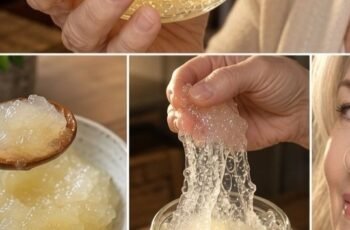
As the mixture thickens, it may become slightly foamy and develop a slippery, stretchy texture.
To check its consistency, lift the spoon out of the saucepan. If the liquid falls in a thicker stream rather than running like plain water, it may be ready to strain.
Avoid cooking it for too long. The gel will continue thickening as it cools, and an excessively thick mixture can be difficult to strain.
Step 3: Strain the Gel While It Is Still Hot
Turn off the heat and carefully pour the hot mixture through a fine-mesh strainer into a clean, heat-resistant bowl.
Use a spoon to gently encourage the liquid to pass through the strainer, but avoid pressing excessive amounts of seeds through the mesh.
Important: The mixture is hot, so handle the saucepan and strainer carefully to prevent burns.
Straining promptly is important because the mucilage becomes thicker as it cools, making separation from the seeds more difficult.
Discard the remaining seeds rather than attempting to reuse them in the facial gel.
Step 4: Allow the Gel to Cool
Leave the strained gel to cool until it is no longer hot. This may take approximately 15–20 minutes, depending on the quantity and room temperature.
Do not add aloe vera or glycerin while the mixture is extremely hot, as excessive heat may affect the texture or stability of the added ingredients.
Once the gel has cooled, inspect its consistency. It should be smooth and slippery, with no large pieces of flaxseed remaining.
Step 5: Add the Aloe Vera and Glycerin
Add one tablespoon of cosmetic-grade aloe vera gel to the cooled flaxseed mixture.
If desired, add ½ teaspoon of vegetable glycerin.
Stir gently with a clean spoon or whisk until the ingredients are evenly combined.
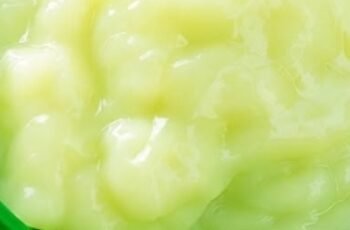
The finished preparation should have a smooth, gel-like texture that can be spread easily across the skin.
If the gel is too thick, it may be more comfortable to prepare a fresh batch with slightly more water rather than adding water to the finished product. If it is too thin, the next batch can be simmered a little longer.
Step 6: Transfer to a Clean Container
Transfer the gel into a clean, dry container using clean utensils.
Close the lid and place the container in the refrigerator promptly.
Because this homemade preparation contains water and has no validated preservative system, it can support microbial growth even when it looks and smells normal. For this reason, prepare a small batch and use it promptly rather than relying on a long storage period.
How to Apply Flaxseed Face Gel
If you would like to try this preparation, follow these steps to make application simple and gentle.
Step 1: Cleanse Your Face
Wash your face with a gentle cleanser suitable for your skin type.
Pat your skin dry with a clean towel, avoiding vigorous rubbing.
Step 2: Perform a Patch Test
Before applying the gel to your entire face, test a small amount on an inconspicuous area of skin.
Observe the area for irritation over the next 24–48 hours. Stop using the product if you experience redness, itching, burning, swelling, or a rash.
A patch test can reduce the likelihood of an unpleasant reaction, but it cannot guarantee that the product will be safe for everyone.
Step 3: Apply a Thin Layer
Using clean fingers or a clean cosmetic spatula, spread a thin layer over your face.
Avoid the eyelids, the immediate eye area, broken skin, and any areas that are already irritated.
Do not apply the gel too thickly. A thin layer is easier to remove and is less likely to feel excessively tight as it dries.
Step 4: Let It Sit Briefly
Allow the gel to remain on the skin for approximately 10–15 minutes initially, or follow the directions for any commercial ingredients used in your mixture.
As the water evaporates, the gel may leave a temporary tightening sensation.
This effect comes from the film formed on the skin’s surface. It should not be interpreted as evidence that wrinkles are disappearing or that collagen is being rebuilt.
If the gel feels uncomfortable, excessively tight, or irritating, rinse it off immediately.
Step 5: Rinse and Moisturize
Rinse your face gently with lukewarm water and remove any remaining residue without scrubbing.
Pat your skin dry and apply a moisturizer suitable for your skin type.
If you use this treatment during the daytime, finish with broad-spectrum sunscreen with SPF 30 or higher. Sunscreen is one of the most important steps for protecting the skin against premature aging caused by ultraviolet radiation.
How Does Flaxseed Gel Affect the Appearance of Wrinkles?
Flaxseed gel may temporarily improve the way the skin feels and looks, but it is important to understand the difference between temporary cosmetic effects and long-term changes in the skin.
Temporary Surface Smoothing
The gel forms a thin film as it dries. This can produce a tightening sensation and may make some fine surface lines appear less noticeable for a short period.
The effect generally diminishes when the film is washed away or disrupted.
Improved Skin Hydration
Aloe vera and glycerin may help improve surface hydration. Well-hydrated skin can look softer and temporarily make fine lines associated with dryness less noticeable.
However, the degree of benefit will vary depending on your skin type and the formulation.
What It Cannot Reliably Do
There is insufficient clinical evidence to conclude that homemade flaxseed gel:
- Permanently removes wrinkles.
- Rebuilds collagen or elastin.
- Lifts sagging skin in the same way as a medical or cosmetic procedure.
- Reverses deep wrinkles or significant age-related skin changes.
- Produces guaranteed results after a particular number of applications.
If your goal is to improve the appearance of fine lines over time, established skincare measures such as daily sunscreen, regular moisturization, and appropriately selected retinoid products may offer better-supported benefits. Retinoids can irritate some skin types, so consider professional guidance before using them, especially if you have sensitive skin.
How Often Can You Use Flaxseed Face Gel?
There is no established clinical schedule for homemade flaxseed gel.
If your skin tolerates the product, you might choose to use it occasionally as a temporary hydrating or firming cosmetic mask. Begin with infrequent applications rather than assuming that daily use will produce better results.
Avoid applying it to irritated skin, and stop using it if you notice any adverse reaction.
People with eczema, rosacea, a damaged skin barrier, or a history of cosmetic allergies should be particularly cautious when trying homemade skincare preparations.
Storage and Shelf Life: Important Safety Advice
Homemade flaxseed gel is a water-based product without a professionally validated preservative system. That means bacteria, yeast, and mold may grow during storage.
Refrigeration slows the growth of many microorganisms, but it does not sterilize the product or make it reliably safe for an extended period.
For safer handling:
- Prepare only a small quantity.
- Use clean equipment and a clean storage container.
- Refrigerate the gel promptly at 4°C (40°F) or below.
- Avoid touching the stored gel with unwashed fingers.
- Discard any remaining gel after a short period; making a fresh batch for each use is the most cautious option.
- Discard it immediately if you notice an unusual smell, discoloration, visible growth, or a change in texture.
Important: A gel that looks and smells normal is not necessarily free of harmful microorganisms. Do not assume that a homemade batch is safe for 7–10 days simply because it has been refrigerated.
If you need a product with a longer shelf life, a commercially manufactured facial gel with an appropriate preservative system is a more reliable choice.
Common Mistakes to Avoid
Boiling the Mixture for Too Long
Excessive cooking can make the gel difficult to strain and overly thick once cooled. Monitor the texture and remove it from the heat when it becomes sufficiently slippery.
Adding Ingredients While the Gel Is Too Hot
Allow the mixture to cool before incorporating aloe vera and glycerin. This helps preserve a more consistent texture.
Applying Too Much Product
A thick layer can dry unevenly and create an uncomfortable pulling sensation. A thin layer is generally easier to use and remove.
Using the Gel Near the Eyes
Homemade products are not necessarily formulated or tested for use around the eyes. Keep the gel away from the eyelids and eye surface to reduce the risk of irritation or accidental contamination.
Assuming Natural Means Risk-Free
Plant-derived ingredients can still cause irritation or allergic reactions. Clean preparation, careful storage, and appropriate use are important even when all the ingredients are natural.
Frequently Asked Questions
1. Can Flaxseed Gel Make Wrinkles Disappear Overnight?
No reliable evidence shows that flaxseed gel removes wrinkles overnight. Its drying film may temporarily make skin feel tighter and give fine surface lines a smoother appearance, but the effect is cosmetic and temporary.
2. Can I Use Flaxseed Gel Every Day?
There is no established evidence that daily use is necessary or more effective. If you choose to use it, start occasionally and monitor your skin for irritation. Prepare fresh batches frequently because homemade water-based gels can become contaminated.
3. Can I Leave Flaxseed Gel on My Face Overnight?
It is better to begin with a short application and rinse it off. Leaving a homemade gel on overnight has not been shown to improve its benefits and may increase exposure to potential irritants or contaminants.
4. Is Fresh Aloe Vera Better Than Store-Bought Aloe Vera Gel?
Not necessarily. Fresh aloe can contain yellow latex from the leaf, which may irritate the skin. A reputable cosmetic-grade aloe vera gel formulated for facial use offers more predictable handling and ingredient information.
5. Can Flaxseed Gel Replace My Regular Moisturizer?
It should not automatically replace your moisturizer. Although the gel may provide temporary hydration, its formulation is not standardized, and it may not provide the full range of moisturizing ingredients found in a well-formulated product.
Apply a suitable moisturizer after rinsing if your skin needs additional hydration.
6. Does Flaxseed Gel Stimulate Collagen Production?
There is insufficient clinical evidence to conclude that applying homemade flaxseed gel stimulates collagen production in human skin. Claims about collagen rebuilding should not be confused with the temporary tightening effect of a drying gel.
Conclusion
Homemade flaxseed face gel is a simple, inexpensive skincare preparation that uses the natural mucilage released when flaxseeds are boiled in water. Combined with aloe vera and a small amount of vegetable glycerin, it creates a smooth gel that may help the skin feel hydrated, soft, and temporarily firmer.
The key is to maintain realistic expectations. Although the gel may provide a temporary smoothing effect as it dries, it has not been proven to eliminate wrinkles, rebuild collagen, or reverse skin aging.
Careful preparation, a patch test, gentle application, and cautious storage are essential when experimenting with homemade skincare products. For lasting skin protection, combine any cosmetic mask you enjoy with regular moisturizing, daily sunscreen, and evidence-based skincare practices.
With a little care and the right expectations, flaxseed gel can be an interesting addition to a simple self-care routine without relying on exaggerated claims about its effects.
Disclaimer: This article is for general informational purposes only and is not intended to diagnose, treat, cure, or prevent any medical condition. Homemade skincare products are not sterile and may cause irritation or allergic reactions. Their cosmetic effects and safety have not been clinically established. Consult a qualified dermatologist if you have a skin condition, persistent irritation, or concerns about choosing an appropriate skincare treatment.