A Calm Guide to Identifying and Managing Bugs in Your Child’s Hair
Finding an unfamiliar bug in your child’s hair can be alarming. One small insect or dark speck may immediately raise questions: Is it head lice? Could it be a tick? Are those tiny spots actually eggs? And does the whole family need treatment?
The good news is that finding a bug in your child’s hair does not automatically mean there is a serious problem. In many cases, the most important thing you can do is identify what you are looking at before using any treatment.
Head lice, ticks, and insects that accidentally become trapped in the hair require very different responses. Taking a few minutes to inspect the scalp carefully can prevent unnecessary treatments, excessive cleaning, and a lot of anxiety.
Start With Careful Inspection
Before reaching for a lice treatment or other product, move to an area with plenty of light. Natural daylight is ideal, but a bright lamp can also work well.
Separate the hair into small sections and examine the:
- Scalp
- Hair shafts
- Area behind the ears
- Hairline and neckline
- Nape of the neck
Look closely at the insect or object and ask yourself a few simple questions:
Is it moving? Is it attached to the skin? Is it firmly attached to a hair? Are there several similar insects? Do you see small oval-shaped objects attached to individual hairs?
These observations can help distinguish between lice, ticks, and harmless insects.
What Head Lice Look Like
Head lice are tiny, wingless insects that live primarily in human scalp hair. Adult lice are roughly the size of a sesame seed and move by crawling through the hair. They do not fly or jump.
Lice have small claws that allow them to grip hair securely. Female lice attach their eggs, commonly called nits, to individual hair shafts using a sticky substance. Because of this, nits tend to remain firmly attached and can be difficult to remove with ordinary brushing.
Lice are often found around the ears and near the neckline, although they can occur anywhere on the scalp.
An itchy scalp can be a symptom of head lice, but itching alone does not prove that lice are present. Some people may have few or no symptoms, particularly early in an infestation.
It is also important to understand that head lice are not a sign of poor hygiene. Children from all kinds of households can get lice. They are commonly spread through close, direct hair-to-hair contact, particularly when children play together.
How Ticks Are Different
Ticks behave very differently from head lice.
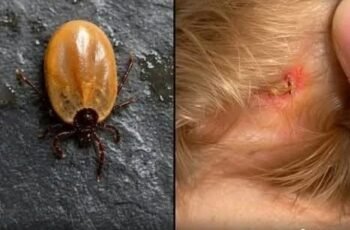
A tick usually attaches directly to the skin and stays in one location while feeding. Depending on its species and how long it has been attached, it may look relatively flat or become more rounded.
Ticks can be especially difficult to notice in thick hair. If you suspect a tick, carefully separate the hair and determine whether the insect is actually attached to the skin.
After spending time outdoors in areas where ticks are present, it is sensible to check your child’s body carefully. Pay particular attention to the scalp, hairline, behind the ears, under the arms, around the waist, behind the knees, between the legs, and around the ankles.
Discovering a tick does not automatically mean your child has developed a tick-borne illness, but an attached tick should be handled appropriately.
Could It Simply Be an Ordinary Insect?
Not every insect found in a child’s hair is a louse or tick.
An insect may occasionally become trapped in the hair after playing outdoors, sitting in grass, or spending time around plants and animals. An accidental insect will generally not be firmly attached to the scalp, and you may find only one.
You also would not normally expect to find multiple eggs firmly attached to nearby hairs.
For this reason, finding one moving insect should not immediately lead to the conclusion that your child has head lice. Look at the overall evidence rather than focusing on a single speck.
How to Tell Nits From Dandruff
One of the most confusing parts of checking for head lice is distinguishing nits from ordinary debris.
Dandruff, dried skin, lint, sand, and hair-product residue can sometimes look similar to lice eggs.
Nits are generally attached firmly to individual hair shafts. Unlike loose flakes of dandruff, they do not usually fall away or slide easily along the hair.
Use bright lighting and examine suspicious objects from different angles. A fine-toothed comb can also help during an inspection.
If you are unsure whether you have found a louse, nit, tick, or another insect, avoid repeatedly picking at the scalp. A healthcare professional or pharmacist can help confirm what you are seeing.
What to Do If You Suspect Head Lice
If the evidence suggests head lice, confirm the infestation before treating the entire household.
One useful approach is wet combing. Wet the hair and apply enough conditioner to make it easier to comb. Divide the hair into small sections and use a fine-toothed lice comb, starting close to the scalp and pulling the comb all the way toward the ends.
After each pass, inspect and clean the comb carefully.
If live lice are found, treatment options depend on factors such as your child’s age, local recommendations, previous treatments, and the products available in your area.
If you use a lice-treatment product, follow the instructions exactly. Avoid using multiple insecticide products together or applying treatments more frequently than recommended. Using more product does not necessarily make treatment more effective and may increase the risk of skin irritation or other unwanted effects.
Check Close Contacts—But Don’t Automatically Treat Everyone
Once head lice are confirmed, check other household members and anyone who has had close hair-to-hair contact with the affected child.
However, it is generally not necessary to automatically treat everyone simply because one person has lice. Treatment should be based on evidence of an active infestation and the recommendations for the specific product being used.
Follow-up is also important. Some treatment methods may require careful combing over several days or a second treatment at a specific time.
Always follow the instructions for the particular treatment rather than repeating applications randomly.
When to Ask a Healthcare Professional
If you cannot confidently identify the insect, professional advice can provide reassurance and prevent unnecessary treatment.
It is particularly worth seeking advice when:
- The insect appears firmly attached to the skin.
- Your child recently spent time in an area where ticks are common.
- You repeatedly find insects despite cleaning and combing.
- Your child’s scalp develops significant irritation, sores, or swelling.
- Lice treatment has been used correctly but live lice continue to appear.
- You are unsure whether a suspicious object is a nit, dandruff, or another substance.
Stay Calm and Identify the Problem First
Finding a bug in your child’s hair can certainly be unsettling, but panic rarely helps. The most useful first step is simply to slow down and take a close look.
Good lighting, careful separation of the hair, and attention to whether an insect is moving or attached can provide valuable clues. Head lice, ticks, and accidental insects look and behave differently, so identifying the problem before choosing a treatment is important.
If head lice are confirmed, use an appropriate treatment or wet-combing method and follow up as recommended. If you find a tick, especially one attached to the skin after outdoor exposure, handle the situation appropriately and seek professional advice when needed.
Most importantly, remember that a bug in your child’s hair does not mean your home is dirty or that you have done something wrong. With a calm, methodical approach, most situations can be managed safely and effectively.