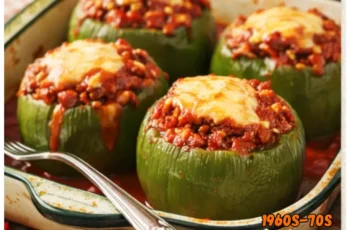
Old-School Stuffed Bell Peppers Recipe: A Classic 1960s Sunday Supper
There is something special about an old-fashioned family dinner that brings everyone together around the table. In the 1960s, home-cooked meals were often built around simple ingredients, familiar flavors, and recipes that could feed the entire family without requiring expensive ingredients or complicated cooking techniques. Among these beloved comfort foods, old-school stuffed bell peppers earned a special place in American kitchens.
Made with tender bell peppers filled with seasoned ground beef, fluffy rice, onions, tomatoes, and savory spices, this classic dish delivers everything you want from a traditional Sunday supper. The peppers soften beautifully in the oven while the filling absorbs the rich flavors of tomato sauce, beef, and herbs. Finished with a generous spoonful of tomato sauce and, if desired, a little melted cheese, each pepper becomes a satisfying meal in its own edible bowl.
This vintage-inspired recipe captures the comforting spirit of a 1960s family dinner. It is affordable, filling, easy to prepare, and perfect for anyone who appreciates traditional American home cooking. Whether you remember your grandmother making stuffed peppers on Sunday afternoons or you are discovering this nostalgic dish for the first time, this recipe brings timeless comfort straight to your kitchen.
Why Old-Fashioned Stuffed Bell Peppers Remain a Family Favorite
Classic stuffed bell peppers have remained popular for generations because they combine everyday ingredients into a complete and flavorful meal. Instead of preparing several separate dishes, you can bring together meat, rice, vegetables, and tomato sauce in one satisfying recipe.
One of the most appealing qualities of this vintage dish is its simplicity. Ground beef provides a hearty, savory foundation, while cooked rice stretches the filling and gives it a tender texture. Onion and garlic add depth, and tomato sauce brings moisture and a gentle tang that balances the richness of the meat.
Bell peppers serve as both the main vegetable and the container for the filling. As they bake, their natural sweetness becomes more pronounced, complementing the savory mixture inside. Green bell peppers are especially popular in traditional recipes because their slightly earthy flavor contrasts beautifully with the tomato-based filling. Red, yellow, and orange peppers also work well if you prefer a sweeter result.
Another reason this recipe deserves a place in your regular meal rotation is its versatility. You can prepare it for Sunday dinner, serve it during a busy week, or make a batch ahead of time for convenient lunches. The ingredients are easy to find, and the recipe can be adapted to suit different tastes without losing its old-fashioned character.
Ingredients for Classic 1960s Stuffed Bell Peppers
This recipe makes six stuffed bell peppers and serves approximately six people, depending on the size of the peppers and the portions.
Main Ingredients
- 6 medium green bell peppers
- 1 pound lean ground beef
- 1 cup cooked white rice
- 1 medium yellow onion, finely chopped
- 2 cloves garlic, minced
- 1 can (15 ounces) tomato sauce
- 1 can (14.5 ounces) diced tomatoes, drained slightly if very watery
- 1 tablespoon tomato paste
- 1 tablespoon Worcestershire sauce
- 1 teaspoon salt, or to taste
- 1/2 teaspoon ground black pepper
- 1 teaspoon Italian seasoning
- 1/2 teaspoon paprika
- 1 tablespoon olive oil, if needed
- 1/2 cup beef broth or water, for the baking dish
Optional Toppings
- 1 cup shredded cheddar cheese or mozzarella cheese
- 2 tablespoons chopped fresh parsley
- Additional tomato sauce for serving
- A pinch of dried oregano
A note about the traditional flavor: Many mid-century home cooks relied on ground beef, white rice, canned tomatoes, and simple seasonings. You do not need an elaborate spice blend to make this dish taste delicious. The key is to season the filling properly and allow the peppers enough time to become tender in the oven.
Equipment You Will Need
Before you begin, gather a few basic kitchen tools:
- A large skillet for browning the beef
- A medium saucepan or rice cooker for preparing the rice
- A sharp knife and cutting board
- A spoon for filling the peppers
- A large baking dish
- Aluminum foil
- A meat thermometer for checking doneness
A standard 9-by-13-inch baking dish usually works well, although you may need a larger dish if your peppers are particularly tall.
How to Make Old-School Stuffed Bell Peppers
Step 1: Prepare the Bell Peppers
Preheat your oven to 375°F (190°C).
Wash the bell peppers thoroughly under cool running water and pat them dry. Using a sharp knife, carefully cut around the stems and remove the tops. Pull out the seeds and white membranes from inside each pepper.
If necessary, trim a very small amount from the bottom of each pepper so it can stand upright in the baking dish. Be careful not to cut a hole through the bottom, as this could allow the filling and juices to escape during baking.
Arrange the prepared peppers upright in your baking dish.
For peppers that are particularly firm or large, you can soften them before stuffing. Bring a large pot of water to a boil, carefully add the peppers, and cook them for approximately three to five minutes. Remove them with tongs and allow them to drain.
This blanching step is optional. Skipping it gives the peppers a slightly firmer texture, while blanching helps produce a softer, more traditional baked pepper.
Step 2: Cook the Rice
Prepare the white rice according to the package instructions if you have not already cooked it.
For this recipe, you will need approximately one cup of cooked rice. Long-grain white rice is an excellent choice because it remains relatively separate and combines easily with the meat mixture.
Allow the rice to cool slightly before adding it to the filling. If the rice is freshly cooked and extremely wet, let excess steam escape so that the finished filling does not become mushy.
Using leftover rice is another convenient option. Just make sure it has been stored safely and reheated or handled appropriately during preparation.
Step 3: Brown the Ground Beef
Place a large skillet over medium heat. Add the olive oil if your ground beef is very lean, followed by the chopped onion.
Cook the onion for approximately three to four minutes, stirring occasionally, until it begins to soften. Add the minced garlic and cook for another 30 seconds, taking care not to let it burn.
Add the ground beef to the skillet. Use a wooden spoon or spatula to break the meat into small pieces as it cooks.
Continue cooking for approximately six to eight minutes, or until the beef is thoroughly browned. Drain excess fat if necessary, leaving a small amount to help carry the flavors throughout the filling.
Browning the meat properly is an important step. It develops a deeper savory flavor and prevents the finished filling from tasting bland.
Step 4: Build the Classic Tomato Filling
Add the tomato paste to the browned beef and stir for about one minute. This allows the tomato paste to develop a richer flavor.
Next, add the diced tomatoes, approximately half of the tomato sauce, Worcestershire sauce, salt, black pepper, Italian seasoning, and paprika.
Stir everything together until the ingredients are evenly combined. Allow the mixture to simmer gently for five minutes so the flavors can blend.
The Worcestershire sauce contributes a subtle savory depth, while the tomato sauce gives the filling its familiar old-fashioned character.
Taste the mixture and adjust the seasoning as needed. If the tomatoes are particularly acidic, a small pinch of sugar may help balance the flavor, although it is entirely optional.
Remove the skillet from the heat and fold in the cooked rice.
The filling should be moist but not watery. If it appears too dry, add a little more tomato sauce or broth. If it seems excessively wet, allow it to simmer briefly until some of the liquid evaporates.
Step 5: Stuff the Peppers
Carefully spoon the beef and rice mixture into each prepared bell pepper.
Fill the peppers generously, pressing the mixture down lightly to remove large air pockets. Leave a little space at the top so the filling does not spill over during baking.
Divide the mixture evenly among all six peppers.
Pour the remaining tomato sauce over the tops of the peppers, allowing some of it to run down the sides. This creates a flavorful coating and helps keep the filling moist throughout the cooking process.
For an especially traditional presentation, you can add a spoonful of tomato sauce to the bottom of each pepper before filling it. This small step helps distribute the tomato flavor from top to bottom.
Step 6: Prepare the Baking Dish
Pour the beef broth or water into the bottom of the baking dish around the peppers, rather than directly over the filling.
The liquid creates a little steam during baking and helps prevent the bottoms of the peppers from drying out.
Cover the baking dish tightly with aluminum foil. This traps moisture and allows the peppers to soften while the filling heats through.
Place the dish on the middle rack of your preheated oven.
Step 7: Bake Until Tender
Bake the covered peppers for approximately 35 to 45 minutes.
The exact cooking time depends on the size and thickness of the peppers and whether you blanched them beforehand.
After the initial baking period, carefully remove the foil. Check the peppers for tenderness by gently inserting a fork into the side. They should be soft enough to pierce without falling apart.
Continue baking uncovered for another 10 to 15 minutes if needed. This allows some excess moisture to evaporate and helps the tomato sauce thicken.
If you are using cheese, sprinkle it over the peppers during the final five minutes of baking. Return the dish to the oven until the cheese has melted.
Ground beef should reach an internal temperature of 160°F (71°C). Check the center of the filling with a food thermometer to ensure it is fully cooked and hot throughout.
Step 8: Rest and Serve
Remove the baking dish from the oven and allow the peppers to rest for approximately five minutes before serving.
This brief resting period allows the juices to settle and makes the peppers easier to transfer to individual plates.
Sprinkle with chopped fresh parsley if desired, and spoon a little of the warm tomato sauce from the baking dish over each serving.
Serve the peppers while they are hot, accompanied by mashed potatoes, buttered green beans, a simple garden salad, or a slice of crusty bread.
The result is a comforting, old-fashioned dinner with tender vegetables, a hearty beef-and-rice filling, and a rich tomato sauce that tastes like a treasured family recipe.
The Secret to Making Stuffed Peppers Taste Like Grandma’s
A successful vintage-style stuffed pepper recipe depends on a few simple details. You do not need expensive ingredients or complicated techniques, but paying attention to texture, seasoning, and moisture makes a noticeable difference.
Choose the Right Bell Peppers
Green bell peppers are a classic choice for traditional American stuffed peppers. They have a slightly grassy, savory taste that works particularly well with beef and tomato sauce.
Choose peppers that are relatively uniform in size and can stand upright. Firm peppers with smooth skin are easier to prepare and hold their shape better during baking.
If you prefer a milder and sweeter flavor, use red or yellow peppers. You can even combine different colors to create a beautiful presentation for the dinner table.
Do Not Overcook the Rice
Rice absorbs liquid as it cooks, and it will continue to soften inside the peppers.
Using rice that has been cooked until tender, rather than excessively soft, helps preserve a pleasant texture. Overcooked rice can become mushy when combined with tomato sauce and baked for an extended period.
If you enjoy a firmer filling, slightly undercook the rice before mixing it with the beef, making sure it is still prepared safely for consumption.
Season the Filling Before Stuffing
The meat mixture should taste flavorful before it goes into the peppers.
Remember that the rice absorbs seasoning, and the peppers themselves are relatively mild. Taste the filling and adjust the salt, pepper, and herbs before stuffing.
A little Worcestershire sauce adds depth without overwhelming the traditional flavors. Garlic and onion provide an aromatic foundation, while paprika gives the filling a subtle warmth.
Keep the Peppers Moist
One of the most common problems with stuffed peppers is a dry filling.
To prevent this, avoid using too little tomato sauce, add a small amount of broth to the baking dish, and keep the peppers covered during the first stage of baking.
Uncovering them toward the end allows the sauce to thicken without drying out the meat.
If you prefer an especially saucy dish, serve extra warmed tomato sauce at the table.
Avoid Overstuffing
It may be tempting to pack as much filling as possible into every pepper, but pressing it too firmly can make the texture dense.
Fill each pepper generously without compacting the mixture excessively. Leave a little room at the top for the sauce and any optional cheese topping.
Classic Variations on 1960s Stuffed Bell Peppers
Although the ground beef and rice version is a beloved classic, stuffed peppers have always been adaptable. Different families used whatever ingredients were available, making this recipe easy to personalize.
Stuffed Peppers With Tomato Soup
For a nostalgic variation inspired by pantry cooking, replace some or all of the tomato sauce with condensed tomato soup prepared according to its label.
This creates a smoother, slightly sweeter sauce that coats the peppers beautifully. Adjust the amount of added liquid carefully because condensed soup and prepared soup have different consistencies.
Cheesy Stuffed Bell Peppers
If your family enjoys a richer dinner, add shredded cheddar or mozzarella during the final minutes of baking.
Cheddar creates a sharper flavor, while mozzarella gives the dish a mild, stretchy topping. For a more rustic result, use a small amount of both.
Cheese is optional and not necessary for the traditional beef-and-rice version.
Stuffed Peppers With Italian Seasoning
For a more herb-forward filling, increase the Italian seasoning slightly and add a pinch of dried oregano.
You can also stir in a tablespoon of grated Parmesan cheese if you enjoy a savory, Italian-inspired variation.
Keep the herbs balanced so the flavor of the beef, rice, and peppers remains central to the dish.
Stuffed Peppers With Ground Turkey
Ground turkey offers a lighter alternative to ground beef.
Because turkey is generally leaner, you may need a little extra tomato sauce or broth to keep the filling moist. Season it generously, and cook it to an internal temperature of 165°F (74°C).
The result is a milder version of the classic recipe that still provides the familiar combination of meat, rice, and tender peppers.
Stuffed Peppers Without Rice
If you prefer a lower-carbohydrate filling or simply want to use different ingredients, replace the rice with finely chopped mushrooms, cauliflower rice, or additional vegetables.
The texture and cooking time may change depending on the substitute, so keep an eye on the moisture level.
This variation is less traditional than the original but provides another way to adapt the dish to your family’s preferences.
Meatless Stuffed Bell Peppers
You can also make a vegetarian version by replacing the ground beef with cooked lentils, chopped mushrooms, or a mixture of beans and vegetables.
Use vegetable broth instead of beef broth and check the seasoning before filling the peppers.
Although the flavor differs from the original, the tomato sauce, rice, and bell peppers still create a hearty and comforting meal.
What to Serve With Old-Fashioned Stuffed Bell Peppers
Stuffed peppers are satisfying on their own, but the right side dishes can turn them into a complete Sunday supper.
Creamy Mashed Potatoes
Mashed potatoes are an excellent companion for stuffed peppers because they soak up the rich tomato sauce. Prepare them with butter, warm milk, salt, and black pepper for a classic family-style side dish.
Buttered Green Beans
Green beans provide a fresh, simple contrast to the savory filling. Cook them until tender, then toss with a little butter and season lightly with salt and pepper.
Fresh Garden Salad
A crisp salad made with lettuce, cucumbers, tomatoes, and a simple vinaigrette adds freshness and balances the richness of the beef.
Crusty Bread or Dinner Rolls
Warm bread is perfect for soaking up the sauce left on the plate. Soft dinner rolls also make the meal feel especially welcoming and traditional.
Buttered Corn
Sweet corn pairs naturally with the savory flavors of ground beef and tomato sauce. Serve it steamed or lightly sautéed with butter for an easy side dish.
For a classic Sunday dinner, choose one vegetable, a starch, and a simple dessert. Apple pie, vanilla pudding, or a fruit cobbler would make a fitting finish to this nostalgic meal.
Make-Ahead Instructions
One of the best things about stuffed bell peppers is that much of the preparation can be completed in advance.
If you are planning a busy Sunday dinner, prepare the beef-and-rice filling the day before. Allow it to cool promptly, refrigerate it in a covered container, and use it within three to four days.
You can also prepare the peppers by washing them, removing the seeds, and storing them covered in the refrigerator.
For the best texture, assemble the peppers shortly before baking. Alternatively, assemble the dish in advance, cover it, and refrigerate it promptly. If the filling and peppers are cold when they enter the oven, allow extra cooking time and verify that the center of the filling reaches 165°F (74°C) when reheating a fully cooked refrigerated dish.
Do not leave cooked meat or rice at room temperature for more than two hours, or one hour when temperatures exceed 90°F (32°C).
How to Store and Reheat Leftovers
Leftover stuffed peppers make an excellent next-day lunch or dinner.
Refrigerator Storage
Allow the peppers to cool slightly, then transfer them to shallow, airtight containers. Refrigerate within two hours of cooking and consume within three to four days.
Store extra tomato sauce alongside the peppers to help preserve moisture during reheating.
Freezing Instructions
Stuffed peppers can be frozen for convenient future meals.
For the best results, allow the cooked peppers to cool, wrap them individually, and place them in a freezer-safe container or bag. Label the container with the date.
For quality, use frozen leftovers within approximately two to three months. They may remain safe longer if continuously frozen at 0°F (-18°C), but their texture can gradually deteriorate.
Thaw them in the refrigerator before reheating when possible. Peppers that have been frozen may become softer, but the filling should remain flavorful.
Reheating in the Oven
Preheat your oven to 350°F (175°C). Place the peppers in an oven-safe dish, add a small amount of tomato sauce or water, and cover with foil.
Heat until the center reaches 165°F (74°C). Depending on the size of the peppers and whether they are refrigerated or frozen, this may take approximately 20 to 35 minutes or longer.
Reheating in the Microwave
Place one pepper in a microwave-safe dish with a little sauce. Cover loosely with a microwave-safe lid and heat in intervals, checking and rotating as necessary.
Continue until the center reaches 165°F (74°C). Allow it to stand briefly before eating, as the filling can become very hot.
Common Mistakes to Avoid
Even a straightforward recipe can produce disappointing results if a few details are overlooked.
Using too much liquid: Excess tomato juice can make the filling soupy. Drain particularly watery tomatoes slightly and adjust the sauce gradually.
Skipping the seasoning: Ground beef and rice need sufficient seasoning to taste their best. Taste the filling before stuffing the peppers.
Baking uncovered for the entire cooking time: This can dry out the filling before the peppers become tender. Cover the dish for the initial baking stage.
Choosing peppers that cannot stand upright: Uneven peppers may tip over and spill their filling. Trim a small amount from the bottom if needed, without cutting through the flesh.
Overcooking the peppers: Very soft peppers can collapse when served. Check their tenderness toward the end of cooking and remove them when they reach your preferred texture.
Forgetting the resting period: A short rest makes the peppers easier to serve and gives the sauce time to settle.
Not checking the meat temperature: Always verify that ground beef reaches 160°F (71°C). When reheating leftovers, bring the center to 165°F (74°C).
Frequently Asked Questions
What makes this a classic 1960s stuffed bell pepper recipe?
This recipe draws on the familiar ingredients and home-cooking style associated with mid-century American family meals: green bell peppers, ground beef, white rice, onions, canned tomatoes, and simple seasonings. It is a vintage-inspired preparation rather than a claim to reproduce one specific historical recipe.
Should I boil the bell peppers before stuffing them?
No. Blanching is optional. Boiling the peppers for three to five minutes before filling them helps soften their texture and may shorten the time needed in the oven. If you prefer firmer peppers, you can skip this step and bake them directly.
Is it better to use green or red bell peppers?
Green bell peppers offer a more traditional, slightly earthy flavor. Red, orange, and yellow peppers are sweeter and can be excellent alternatives. Choose firm peppers that are large enough to hold the filling.
Can I use leftover cooked rice?
Yes. Leftover rice is convenient for this recipe and helps reduce preparation time. Make sure it has been refrigerated promptly after cooking and handled safely. If the rice is dry, add a little extra tomato sauce to the filling.
Do I need to cook the ground beef before stuffing the peppers?
For this particular recipe, yes. Browning the beef with onion and garlic develops flavor and allows you to drain excess fat before combining it with the rice. It also makes the filling easier to season consistently.
How long should stuffed bell peppers bake?
At 375°F (190°C), allow approximately 45 to 60 minutes in total, depending on pepper size and whether you blanch them first. Begin checking tenderness after about 35 minutes of covered baking. The ground beef must reach 160°F (71°C).
Can I make stuffed bell peppers without cheese?
Absolutely. Cheese is an optional topping. The traditional combination of beef, rice, tomatoes, and tender bell peppers is flavorful enough without it.
Why are my stuffed peppers watery?
Watery peppers may result from excess liquid in the tomatoes, too much broth in the baking dish, or insufficient uncovered baking at the end. Drain very watery tomatoes slightly and remove the foil during the final stage to help the sauce thicken.
Can I prepare stuffed peppers the night before?
Yes. Assemble the peppers, cover them, and refrigerate promptly. Bake them the following day, allowing additional time if they are cold. Confirm that the filling is fully heated and reaches the appropriate safe temperature.
Are stuffed bell peppers good for meal prep?
Yes. They contain protein, rice, and vegetables in convenient individual portions. Refrigerate leftovers for three to four days or freeze them for longer storage. Reheat thoroughly before serving.
What can I use instead of ground beef?
Ground turkey, ground chicken, cooked lentils, or a mixture of mushrooms and beans can replace the beef. Each option creates a slightly different texture and flavor, so adjust the seasonings and cooking time as necessary.
What is the best sauce for stuffed bell peppers?
A simple tomato sauce is the most familiar choice for this recipe. You can enrich it with a little tomato paste, Worcestershire sauce, and beef broth. For a sweeter, smoother variation, try prepared tomato soup.
Final Thoughts: A Timeless Sunday Supper Worth Bringing Back
Old-school stuffed bell peppers are a wonderful reminder that memorable family meals do not need complicated ingredients or elaborate preparation. With a handful of pantry staples, fresh bell peppers, seasoned ground beef, tender rice, and a comforting tomato sauce, you can create a satisfying dinner that feels both familiar and special.
The beauty of this recipe lies in its balance. The peppers become tender and slightly sweet, the filling remains hearty and flavorful, and the sauce ties everything together. It is the kind of meal that works just as well for a quiet family dinner as it does for a relaxed Sunday gathering.
You can keep the recipe traditional with green peppers and simple seasonings, add cheese for a richer finish, or adapt the filling to suit your family’s preferences. Whatever version you choose, the result is a practical, comforting dish that deserves a place in your collection of favorite home-cooked recipes.
Prepare a batch this weekend, serve the peppers with mashed potatoes or warm dinner rolls, and enjoy the simple pleasure of a classic homemade supper.
If you love vintage comfort food, save this Old-School Stuffed Bell Peppers Recipe to your favorite recipe collection and share it with someone who appreciates the timeless flavors of traditional American cooking.


